Today, the greatest threat to wildlife is habitat loss. This makes sense, because when you take away someone’s source of food and shelter, the chance of survival plummets. In addition to this, some organisms are versatile and can adapt to their environment changing around them – humans obviously being in this category – while others’ survivability depends on very specific conditions. Habitat destruction and degradation has many causes – such as farming, housing, businesses, etc – as well as implications.
Land Conversion
The majority of habitat loss is caused by land conversion, which
comes from the demand for land for agriculture. To date, about 50%
of the world’s habitable land is used for farming, but the demand is growing
once more. With advancements in
technology and medicine, the average life expectancy is increasing. This means
that people are living longer, which in turn means that the human population on
Earth is rising. People, like any other living being, need food. The increasing
demand for food creates a greater need for land to farm said food.
But once the land is cleared for horticulture use, sometimes
unsustainable agricultural processes lead to the desertification – the process
by which fertile land becomes desert – of the land. Basically, millions of
acres of land each year go to waste. The habitat is gone, the ecosystem
destroyed, and nothing is left.
 |
| Desertification. Source |
Monocultures
A monoculture is the cultivation of a single crop in a given area.
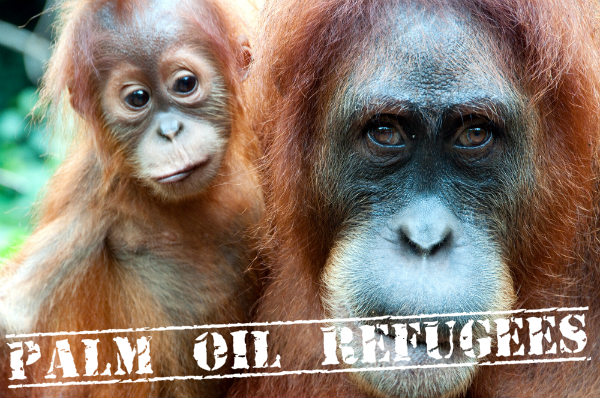
The best example of this problem is the palm oil monoculture.
Palm oil is a product in great demand. It is used in developing countries for
cooking, but is present in a plethora of prepared food products and cosmetics
as well. Although it may not be a huge part of our diet here in the United
States, we consume a lot of palm oil, probably without even realizing it.
 |
| Source. |
The oil palm tree is also a very productive crop, which means that
it’s cheaper to harvest than other vegetable oils and has a greater yield. This
makes it profitable, and because it can only grow in tropical areas, a lot of
tropical forests have been cleared so the land can be used for growing oil
palms. Like any profitable business, there are people who start doing things
illegally. Illegal palm oil plantings are very common, and play a considerable
role in the cutting down of tropical forests.
In the areas where oil palms are grown – primarily on a few
islands in Malaysia and Indonesia – there is a direct relationship between the
growth of oil palm estates and deforestation. This is a problem because
tropical forests are some of the most biodiverse ecosystems on the planet, and
mass conversion is disastrous for a countless number of plant and animal
species.
When habitat is destroyed, the animals that once lived on that
land have to move elsewhere. They can’t all live in the diminished land area,
so oftentimes wild animals find themselves in the backyard of someone’s home.
This obviously creates problems for both parties. Humans lose livestock, crops,
and sometimes even their lives, while the animal that was forced out of its
natural habitat (and is usually threatened or endangered) is killed to prevent
future conflicts.
Climate
A common method of clearing trees is to burn them, which releases
a lot of carbon dioxide into the atmosphere. An increase in the amount of carbon
dioxide in the atmosphere, coupled with a decrease in the amount of trees that
can absorb the carbon dioxide, leads to climate change.
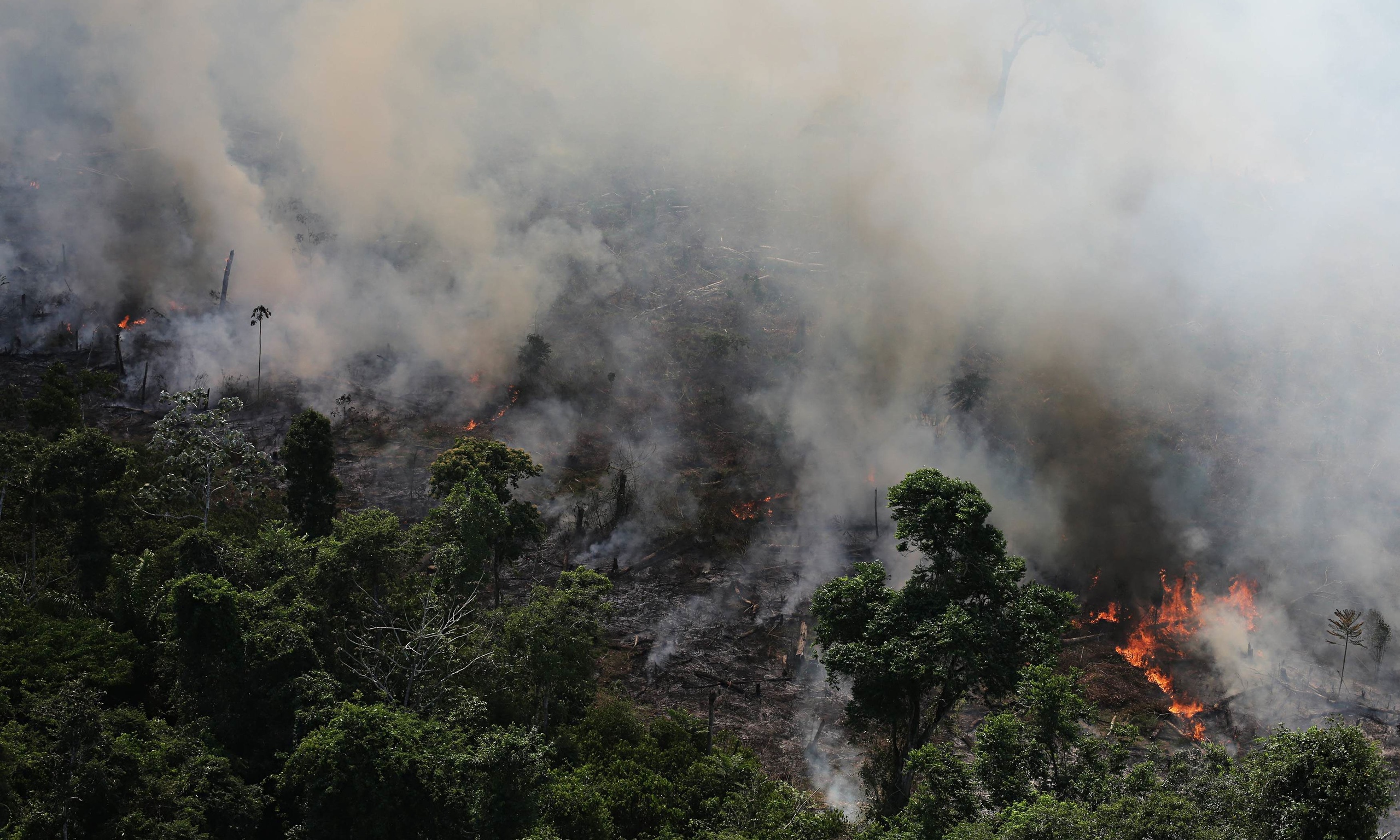 |
| Burning the trees to clear land. Source. |
Forests also play a significant role in regulating weather. In
October 2014, an article
was published in the Guardian that described the impact that deforestation of
the Amazon Rainforest had on Brazil’s weather: “The Amazon works as a giant
pump, channeling moisture inland via aerial rivers and rainclouds that form
over the forest more dramatically than over the sea…It also provides a buffer
against extreme weather events, such as tornadoes and hurricanes.” This is
important because at the time of the publication, Brazil was going through a
severe drought. Deforestation of the Amazon has led to an increase in the
country’s dry period, which means that it has a direct effect on humans, not
just wildlife.
Next steps
Climate change, illegal activities, loss of biodiversity… those
are only a few of the issues that arise when it comes to habitat destruction.
But like with many environmental and conservational issues, the first step is
to educate the public and get them to believe that there is an urgent problem
that needs fixing. Only then will any action truly occur. However once that is
done, ecosystems must be preserved and restored. What is the best way that this
can be accomplished? Is it possible to see a greener future on the horizon?
 |
| Reality. Source. |

Land conversion is definitely going to be a large issue in the future as population increases and the change in climate will allow once-infertile land to become arable. As the Earth gets warmer and places such as Russia and Canada become more agriculture-based, it'll be interesting to see how we proceed with staying green. Nice last post!
ReplyDeleteI just wrote a blog post on deforestation, so I was already aware of a few points you made, but they are definitely very important points! I agree that this problem is urgent and needs fixing, and educating the public is the next step. Great post!
ReplyDeleteI definitely agree that the first step to solving any problem is recognizing that there is a problem. People must be aware and educated of this issue in order to generate feasible solutions that are NECESSITIES because anyone can come up with a solution. However, we are looking for a solution that can make this problem come to a dissolution. So, I definitely love your idea, and it is too bad that everyone are belittling this issue since they are focus on more issues like police brutality and same sex marriage, but this is just as important as any other issue... Great blog post!
ReplyDeleteI thought that your last cartoon really helped to put the problem into one picture, humans are now using almost all of the land, forcing millions of creatures to get up and find a new home, something that is not so easy to do.
ReplyDelete